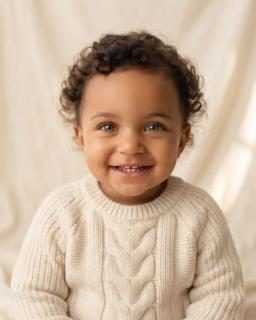
The short answer
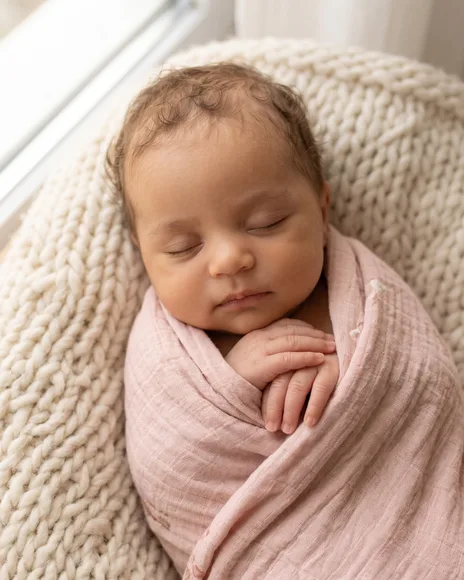
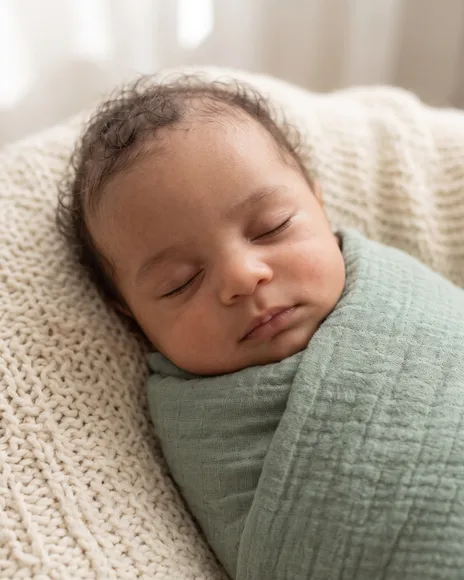
Your baby will be a mix of both of you, but not a neat 50/50. Each parent passes on half of their genes, picked at random, and most of the features you can see (eye colour, hair, skin tone, the shape of the nose and chin) are shaped by many genes working together. That’s why brothers and sisters can look so different, and why no tool can tell you your child’s exact face.
What usually shows up
Eyes
Brown eyes tend to show up more often than green or blue, but two brown-eyed parents can still have a blue-eyed baby if both carry the lighter version. Many babies are born with lighter eyes that darken over the first 6 to 12 months.
Hair
Dark hair and curls tend to show up more often than light, straight hair. Plenty of babies are born nearly bald, or with hair that falls out and grows back in a different shade.
Skin tone
Skin tone is set by many genes at once, so babies of parents with different skin tones usually land somewhere in between, and siblings can land in different places.
Face shape, nose and smile
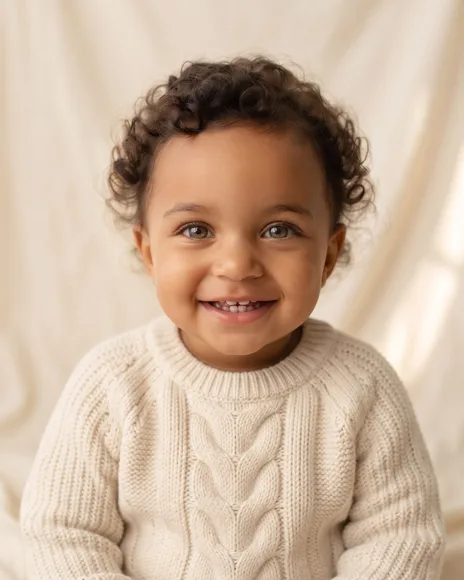
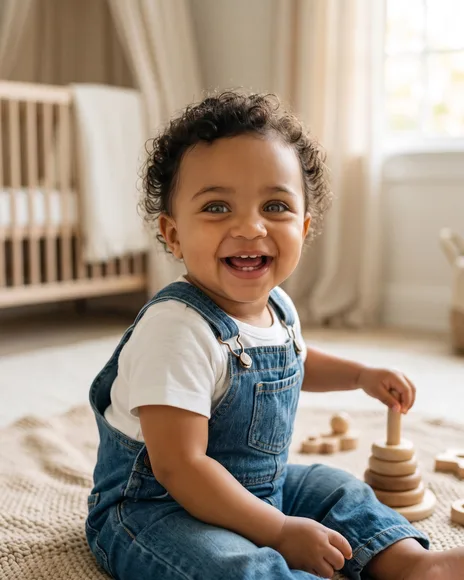
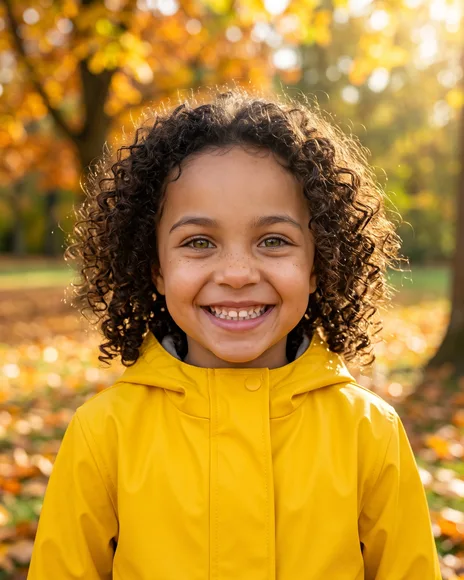
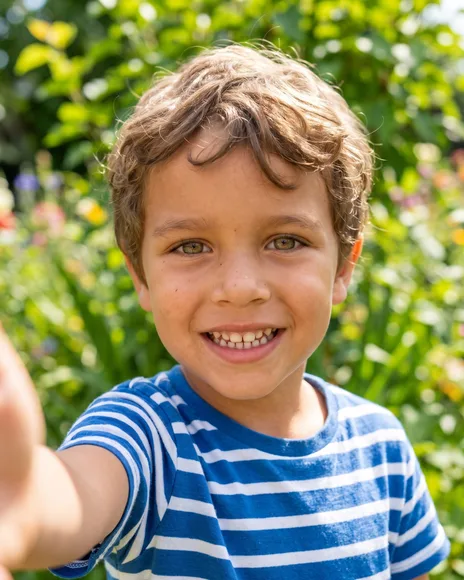
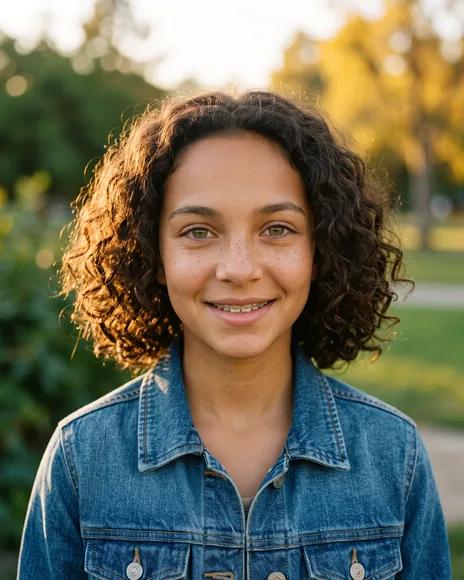
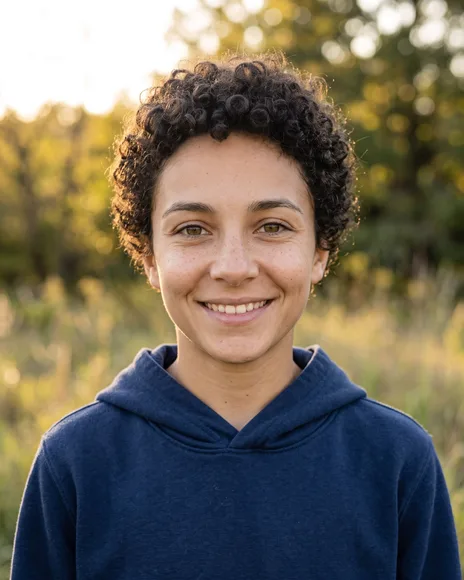
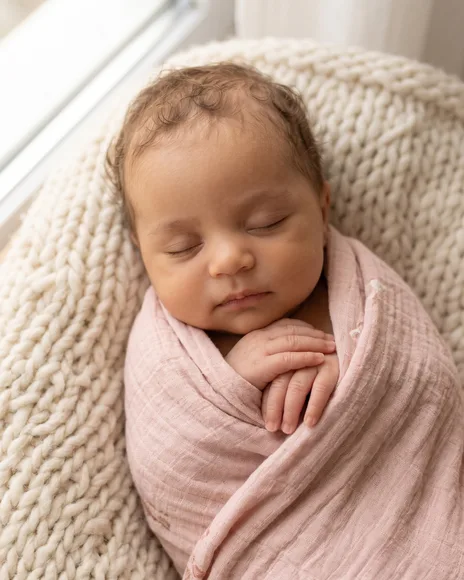
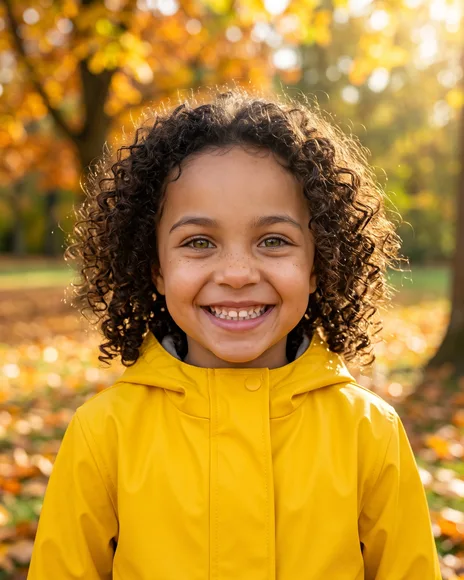
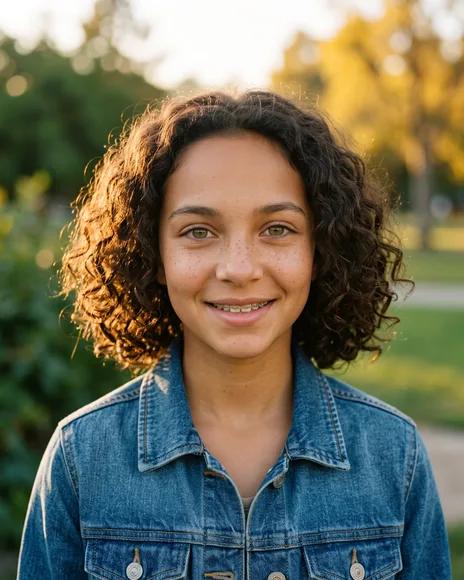
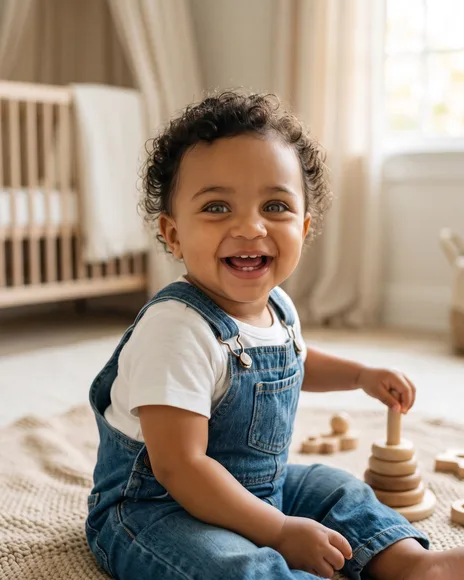
Face shape changes a lot as children grow: a round baby face slims down by school age, and family resemblance often gets stronger in the pre-teen years. That’s why we show your baby at newborn, 1, 5 and 12 rather than a single photo.
How Our Tiny One makes the portrait
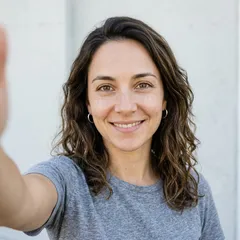
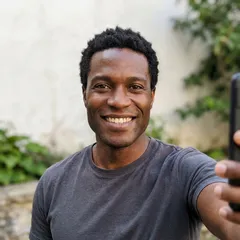
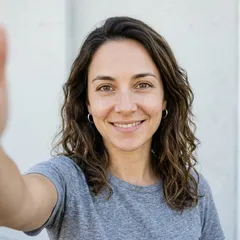
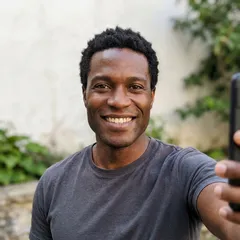
We send your two photos to an image AI with one instruction: imagine the child of these two adults, a natural blend of both faces. The free preview shows your baby at about 1 year old. The full set uses that preview as its reference, so the same child appears at every age, as a girl and as a boy. Your photos are never stored: they’re used for the portrait and dropped right after.
Want the background on the tech? Read how an AI baby generator works.